What’s up with the Moon?
Julie Whatmough | FEB 14, 2022
moon
energy
duality
lunar
introspective
What’s up with the Moon?
Julie Whatmough | FEB 14, 2022
Who doesn’t love to look up at a starry sky on a dark night? To see the radiance of the Universe, to welcome the change in perspective of how big (or small) our problems really are.
The night has a natural way of putting us in a state of awe and wonderment.
It seems that everywhere I look these days people are talking about the moon (and no I’m not just looking in a mirror talking about it to myself ;). Full moon rituals seem more popular than ever and with it there is an interest in connecting to nature and the ways of old. However, these rituals and celebrations and tracking of the moon are not new… In fact, you could say they are older than time itself.
Before clocks, there was the sun and the moon. Our time and season keepers, the holders of the cycles of life. All around the world our indigenous ancestors watched the sky to determine, well, everything. Is it a good time to plant seeds, or marry or go to war?
According to Pattalee Glass-Koentop author of ‘Year of Moons, Season of Trees’, the very first calendars were simply counting the days. Pattalee also proposes that life before the invention of time as we know it was more relaxed since meetings were arranged around general time of day. You might meet for dinner at sunset, instead of 6:00 pm sharp, or instead of meeting on Tuesday, you plan for the next full moon.
Time & Space (aka: spacetime)
It’s still possible for us to be connected to the world in this way, to slow down and honor earth's natural rhythms. You may remember we talked about staying in tune with the changing of the seasons in the Wheel of the Year blog. Below we will look at another way to flow with the cycles of life: by observing the moon.
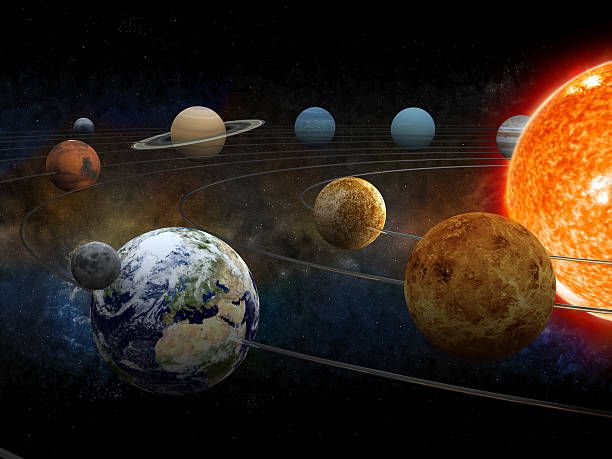
There are about 13 lunar cycles each year, with a predictable 14-day cycle (or fortnight) between the new and full moon. The complete cycle has 4 main phases, BUT before we talk about these phases let’s review the Celestial bodies involved.
Why? Taking a more holistic view of the realm around us allows a deeper understanding of not only the parts but how they relate to the whole. This requires leaving behind the social dogma programming we have received about time and the disjointed approach of looking at individual pieces instead of the whole. Just as our human bodies exist as a whole and not in parts, we can understand the relationship between celestial bodies which are pieces of a larger system.
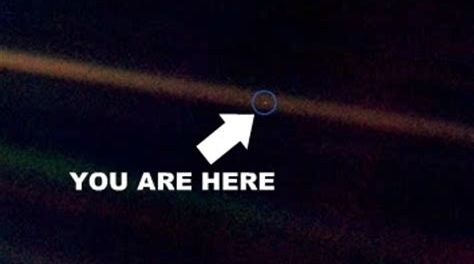
So let’s acknowledge that the moon is never merely the moon. It is the reflection of the sun and the phase we see as it relates to us and the sun. We can go one step further and say it is also the zodiac sign associated with it, relating us to constellations, or as they truly are - other SETS of suns! That’s amazing!
The Earth = heart, grounding, stability
The Sun = ego, power, ability to-do, physicality
The Moon = emotions, unconscious, habits, reactions, deep needs
Side note: magickally speaking, the moon is the energy of wisdom, intuition, introspection, psychic ability, and understanding. This is the energy in which I focus the yoga + meditation practice in my online class Moonday Ritual.
Okay! Now that we’ve covered that, let's turn our attention to the phases of the moon.
The Moon and its Phases
We have seen that different celestial bodies hold different kinds of energy and represent different aspects of us and our lives. Similarly, each phase of the moon carries with it a different energy, and we experience lunar energy as continuous change. The motion is an ebb and flow, much like the ocean (think Tidal Effect) it draws out and then comes back in. It waxes and wanes. The energies are as follows:
I think of the Moon as soft and deeply feeling, asking our spirit to open and receive, to grow and release; so that we may ebb and flow with the changing tides of life moving from season to season.
Note: You can align the moon phases with the wheel of the year. For example, the new moon would match with the winter solstice, while the full moon aligns with the summer solstice, etc.
Yoga & the Energy of the Moon
In the text ‘Asana Pranayama Mudra Bandha’, Swami Satyananda Saraswati explains how lunar energy equates to Ida, the left side of our body, which he describes as “the feminine or mental force which is responsible for consciousness.”
Lunar qualities are cool, dark, creative, passive, and introverted.
In contrast with Ida is the Pingala energy, or the right side of our body, which is masculine and excels in extroversion and activity, is represented by the sun which is bright and hot.
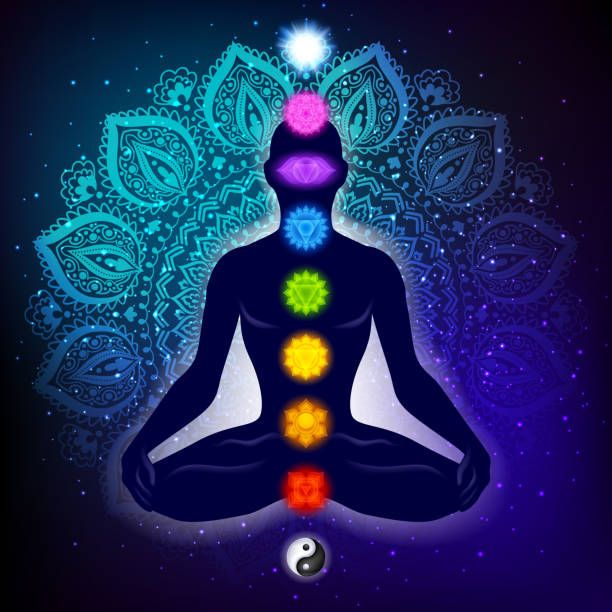
You may recognize Ida and Pingala as Yin and Yang, the opposing energies that create a whole. In yoga, this duality is brought into wholeness in the Sushumna, our spiritual energy channel which runs from the base of the spine to the top of the head. It is in this central column that Kundalini (divine feminine energy) rises up in our bodies and we achieve enlightenment.
Men & the Feminine
Now I want to be clear: when I say that the feminine energy is passive, this is not to be read as “women are passive”- dead stop.
For much of my life, I have identified as a feminist. Not because I hate men, but because I have always believed that I am equally strong and capable, if not physically in other ways. As much as I want womxn to be able to hold the same respect that society regards for men, I also want mxn to be able to express their emotions.
The oppression of the feminine is not a one-sided fight. Men, too, are oppressed by society’s imposition that men should not cry, should not reach out to their male friends and share how they feel. This is bull shit. Not only does it put an added emotional labor onto women to handle the emotions of men (If you are unfamiliar with this term please search “emotional burden women” and read some article - again, not to say that men never take on emotional burdens, but we are looking at patterns of the whole, not only in US society but across the globe) but it also leads men to neglect an entire part of their being.
Much of reconnecting with the Moon has been popularized by womxn through discussions about Moon Cycles, recognizing that those of us carrying wombs are cyclical beings, ovulating and bleeding. These moon discussions are a form of empowerment as we become more attuned to the way our menstrual cycle affects our hormones, emotions, and physical energy.
There is some research to show that mxn are also affected by a cycle, where their testosterone fluctuates, but the reasons are unknown. Often men are considered to be more linear, however, this is also perpetuated by society’s reaction to their emotions and how they should express them. Or rather, never express them - as the “man up” message is still strong in the media and “conventional” gender “norms” continue to try to divide men and women.

Above I said that I like to think of the moon as soft, well, I also like to think of us humans as soft, because the reality is that we are soft. As children, we are easy to mold, and as psychology is proving more and more, the first 5 years are crucial to our development as humans.
Tuning into the rhythms of the moon is a way to focus on our nurture and needs, caring for ourselves, and healing a deep wound on the human consciousness. It is taking a stand against the strict regimen of technology and industry, and shifting into the organic energy of the Earth. This natural connection we have has been ignored for too long and has created a society of people who are out of touch with themselves, endangering individual, ecosystem, and planetary health.
In conclusion...
While moon rituals are not new to humanity, I believe that the wave of people interested in the Moon, in reacquainting themselves to the rhythms of nature, is a powerful shift in our society. It’s an evolution of spirit and consciousness, a revolution back to our roots.
More about how to perform your own ritual in a blog to come...
Julie Whatmough | FEB 14, 2022
Share this blog post
 OfferingTree